Wachau Valley Apricots: The Marille, the Protected Name and Where to Buy
The short answer. The Wachauer Marille is the valley's apricot, and its name is an EU protected designation of origin held by 227 growers. The fruit is sold almost only at the farm gate, so you buy it from a grower in the valley, ideally ordered by phone first. The 2026 harvest was over by 1 August.
In Vienna you will see apricot jam, apricot dumplings and apricot brandy everywhere. In the Wachau you see the trees. The apricot shapes the landscape as much as the vine does, and the valley guards its name as closely as its wine. Here is what makes a Wachau apricot, how to buy one, and which Wachau Valley guided tours bring you close to the orchards.
What "Wachauer Marille" means
Marille is the Austrian word for apricot. "Wachauer Marille g.U." is protected across the EU as a designation of origin. The initials stand for geschützte Ursprungsbezeichnung, the German for a protected designation of origin. Only fruit grown in the Wachau by a member grower can carry it, together with the trademark "Original Wachauer Marille".
Donau Niederösterreich, the regional tourist office, calls it one of the few Austrian products protected as a separate brand within the EU. The growers are organised in the association Wachauer Marille g.U., based at In der Spitz 1 in Spitz an der Donau.
Why the valley grows good apricots
The same things that shape Wachau wine shape the fruit. The tourist office describes an "aroma belt": the warm Pannonian climate from the east meeting cool air from the Waldviertel, close to the Danube. Large differences between day and night temperatures, especially while the fruit ripens, feed straight into its taste and aroma. Soil and centuries of growing do the rest.
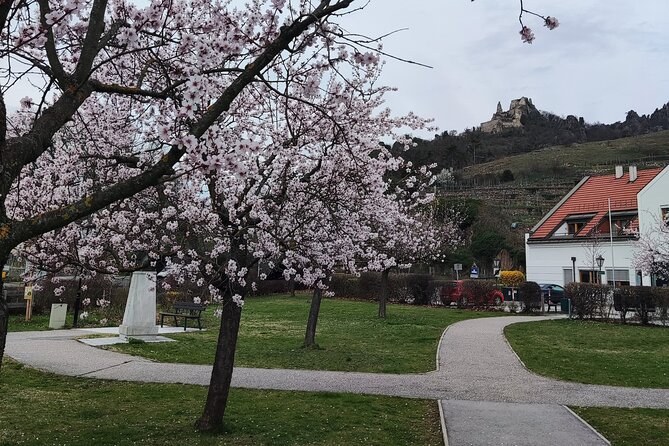
The orchards matter beyond the fruit, too. The tourist office points to the apricot blossom as a reason visitors come to the valley in spring, when the trees flower on the slopes between the vineyards. So when you walk or cycle the Wachau, you are passing through two protected crops at once: the vines above and the apricot trees beside them.
How to buy Wachau apricots
You will not find the protected fruit stacked in a supermarket. The association says Wachauer Marillen g.U. are sold almost only from the farm or the orchard. Demand is high, so it advises you to order ahead by phone with a grower.
- Find a grower in the association's list of members, which you can filter by village.
- Check the Marillenbörse, its apricot exchange, where growers post the day's offers.
- Post a request there if nothing suits you; growers answer as fruit becomes available.
- Phone ahead to reserve, then collect at the farm gate.
In 2026 the association announced on 1 August that the harvest was over. Plan a fresh-fruit visit for the summer, and check its site before you travel. Month-by-month weather is on when to visit the Wachau.
Walking among the apricot trees
The tourist office publishes marked walks through the orchards and vineyards. They are short, easy and good for a morning before a tasting.
| Walk | Starts | Distance | Time |
|---|---|---|---|
| Apricot Experience Route Krems-Angern | Aufreiter wine farm, Krems-Angern | 7.42 km | 2 hours |
| Marillenmeile Ost, stage 1 | Rossatz, Mettenerplatz | 4.90 km | 1 hour 15 minutes |
| Marillenmeile Ost, stage 3 | Rührsdorf | 3.17 km | 45 minutes |
| Marillenmeile West, stage 1 | Oberarnsdorf | 4.34 km | 1 hour 5 minutes |
| Marillenmeile West, stage 4 | Mitterarnsdorf | 6.02 km | 1 hour 50 minutes |
Distances are the tourist office's own, as of September 2026. Rossatz and the Arnsdorfs are on the right bank, across the river from Dürnstein and Spitz; see the Wachau Valley map. The blossom that draws visitors in spring moves with the weather, so check the tourist office's apricot page for the current year before you plan around it.
Apricot cake on the Danube
DDSG Blue Danube sells a "Schiff + Marille" ticket: a sailing from Krems to Spitz and back, from 15:45 to 18:10, with apricot cake and coffee on board, for €47 a person. It is an easy way to taste the valley's fruit and see the orchards from the water on one afternoon. Low water can change the timetable, so read low water on the Danube first. The other ways to reach Krems are on getting to the Wachau from Vienna.
When to look for apricots
The fruit belongs to summer. In 2026 the harvest had finished by 1 August, so a fresh-fruit trip needs a July date or earlier, and the exact weeks change with every season. Outside that window you can still taste the valley's apricots in other forms, such as jam, cake and brandy.
| Your visit | What apricot you find | Where |
|---|---|---|
| Spring | The blossom on the orchard slopes | The Marillenmeile walks |
| Early summer to the end of the harvest | Fresh fruit, ordered ahead | A grower's farm gate |
| Any time you find them | Apricot products and brandy | Village shops, and a farm stop on some private days |
Pair a summer date with the boat and you get the orchards from the water as well. How the season decides that is in Melk Abbey or the Danube boat.
Apricots on a tour
- A family farm in apricot season: the castles and wine private tour can add a farm visit to taste apricot brandy in summer.
- Shops in Melk: a traveller on the Melk Abbey and Danube boat tour in July 2026 used the free hour to buy apricot products around the town square.
- By bike: the winery bike tour crosses to Rossatz-Arnsdorf on the right bank, the same side as the Marillenmeile walks.
Apricots and wine on the same slopes
Apricot trees and vines share the valley's terraces, and both carry protected names. If the wine labels puzzle you, read how to read a Wachau wine list. The terraces and the estates are on Wachau vineyards, and the villages between the orchards are on things to do in the Wachau.
Days that pass the apricot orchards
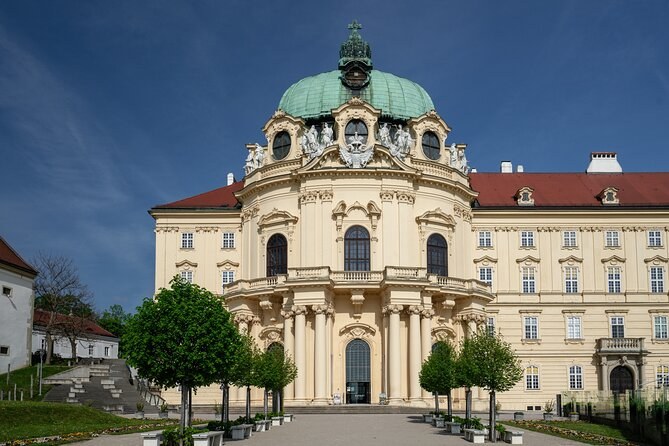
3 Castles & Wine Private Tour in Wachau Valley with Melk Church
Your own guide and driver from your hotel: Klosterneuburg's Treasury, two hours in Dürnstein, a family winery and Melk's courtyards.
From $490 per person
Check Availability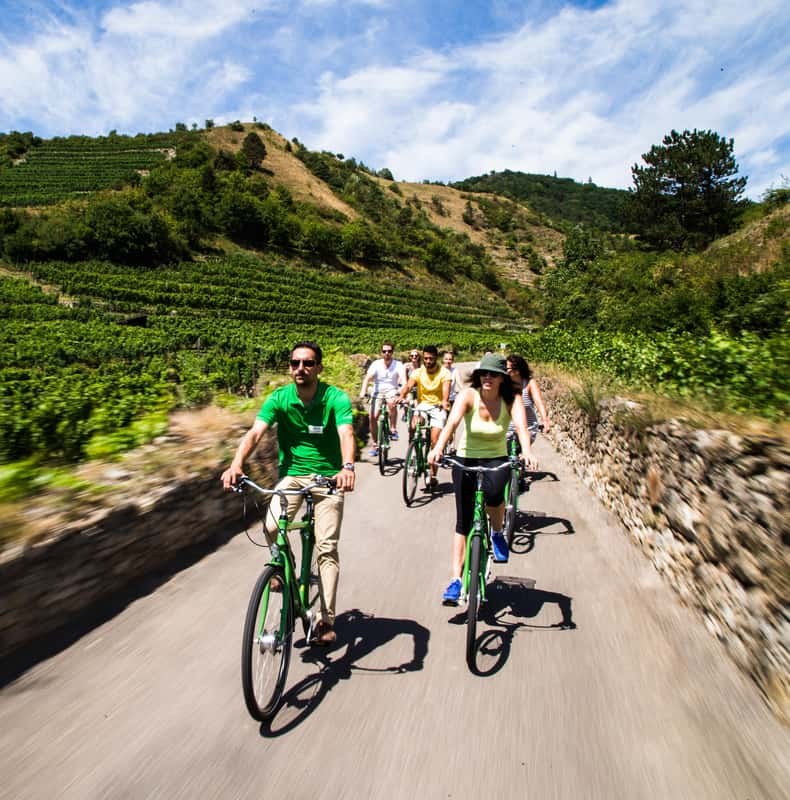
Grape Grazing: Wachau Valley Winery Biking Tour
The train to Krems, 25 km of riding through Dürnstein to Rossatz-Arnsdorf with a ferry crossing, and two winery tastings.
From $159 per person
Check Availability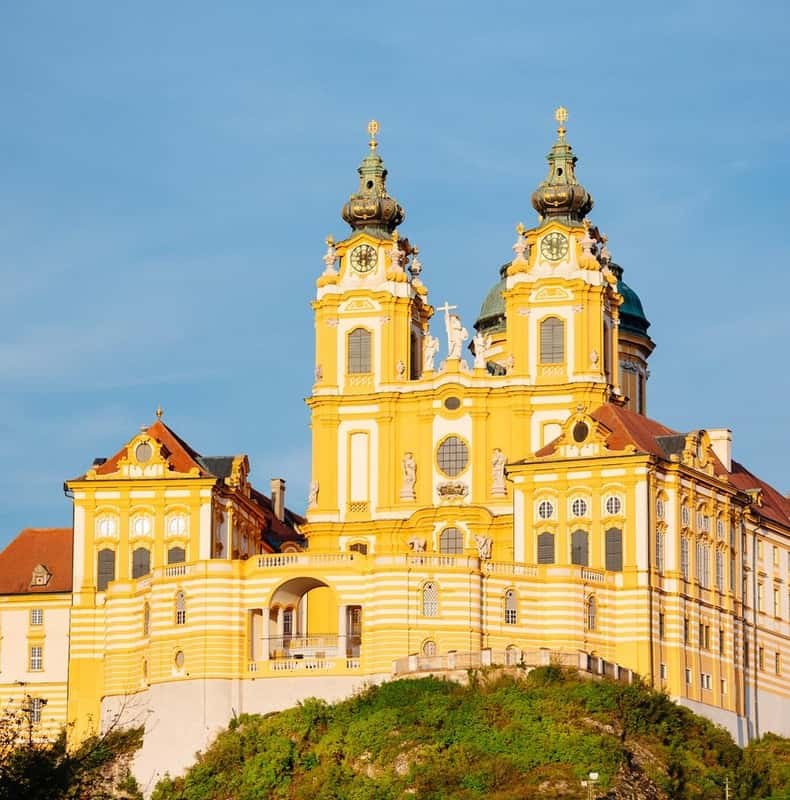
Vienna: Wachau Valley, Melk Abbey Tour with Danube Boat Trip
A coach from Operngasse 8 to Krems, Dürnstein and a 75-minute guided Melk Abbey tour, with the boat from 30 March to 3 November.
From $136 per person
Check AvailabilityNext: plan a summer day in the valley, and leave room in your bag for the fruit. Every fare sits side by side on Wachau Valley Tours.