Steinfeder, Federspiel, Smaragd: Reading a Wachau Valley Wine List
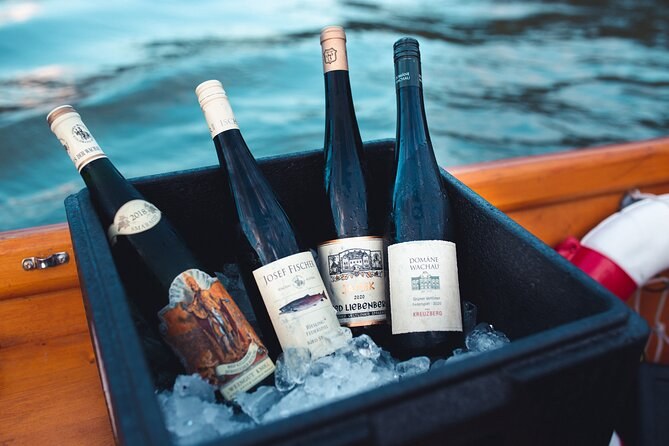
The short answer. Steinfeder, Federspiel and Smaragd are three dry white wine styles, ranked by strength. Steinfeder is light, up to 11.5% alcohol. Federspiel is medium-bodied, no more than 12.5%. Smaragd is powerful, at least 12.5%. Wachau DAC is a separate label that tells you where the grapes grew.
Open a wine list in Dürnstein or Spitz, and three words stand where you expect a grape or a price. They look like estate names. They are not. They are the valley's own shorthand for how heavy a wine is, and once you know them you can order with confidence. Here they are, with the DAC label beside them, in the order you taste them on the Wachau Valley guided tours.
The three styles at a glance
| Style | Alcohol | Named after | In the glass |
|---|---|---|---|
| Steinfeder | Up to 11.5% | Feather grass on the rocky terraces | Fragrant, light and fresh |
| Federspiel | Not more than 12.5% | The falconer's lure | Balanced; made for food |
| Smaragd | At least 12.5% | The emerald lizard in the stone walls | Complex, heavier, built to age |
Definitions are Vinea Wachau's own, as of September 2026.
What the three words have in common
All three styles are dry. All three are white, although Steinfeder and Federspiel may also be rosé. None of them touches oak. Every grape comes from the Wachau, and the wines follow certified sustainability standards.
The names are registered trademarks of Vinea Wachau Nobilis Districtus, the growers' association based in Spitz. Only its member wineries may use them, and it has over 200 estates. So if you see a Wachau bottle without any of the three words, the estate simply is not a member. It does not mean the wine is worse.
Steinfeder: the light one
Steinfeder is named after the European feather grass that grows on the valley's steep rocky terraces. The wine is meant to feel like the grass: light. With up to 11.5% alcohol, it is the glass you can drink at lunch and still walk the cobbled lanes of Dürnstein afterwards. Expect a fresh, clear taste rather than depth.
Federspiel: the one for the table
Federspiel takes its name from falconry. It was the lure a falconer swung to call the bird home. The style sits in the middle: no more than 12.5% alcohol, with a balance between elegance and depth. If you are ordering one bottle for a mixed table at a wine tavern, this is usually the safe choice.
Smaragd: the powerful one
Smaragd grapes stay longest on the vine. The result is a white wine of at least 12.5%, complex and heavier than most, with real ageing potential. The name comes from the Smaragdeidechse, the emerald-green lizard that lives in the dry stone walls of the terraces. Taste it last, after the lighter styles.
Wachau DAC: where the grapes grew
The styles tell you weight. Wachau DAC tells you origin, in three steps that climb like a pyramid. Every grape in every step must be picked by hand.
| Label | Grapes from | Varieties | Oak |
|---|---|---|---|
| Gebietswein (regional) | Anywhere in the Wachau | Any of 17 typical varieties | Allowed, including new barrique |
| Ortswein (village) | One of 22 registered communities | Nine, including Grüner Veltliner and Riesling | No perceptible oak |
| Riedenwein (single vineyard) | One of 157 defined Rieden | Grüner Veltliner or Riesling only | No perceptible oak |
A Ried is a named single vineyard. When you see "Ried" and a name on a label, you are holding wine from one slope. The estates and villages tours visit are on Wachau vineyards.
How to read a label in four steps
- Find the style word to judge the weight: Steinfeder, Federspiel or Smaragd.
- Find the grape. Grüner Veltliner and Riesling lead the valley.
- Look for a village or a Ried to see how narrow the origin is.
- Check the vintage, because a Smaragd changes most with age.
Ordering at a wine tavern
A heuriger is a wine tavern, often run by the family that grows the grapes. On a tour you may eat lunch in one, and the wine list is where the three words earn their keep. Ask for a glass rather than a bottle when you want to compare, and ask which style each wine is.
- With a light lunch or on a hot day: a Steinfeder, the lightest of the three.
- With a full meal: a Federspiel, which the growers themselves pitch as a companion to food.
- To finish, or to take home: a Smaragd, the style most likely to reward a few years in a cellar.
If a list names a village or a Ried beside the style, you now know two things about that wine: how heavy it is, and how narrow its origin. That is more than most wine lists anywhere tell you. Your guide can point out the estates that make each style as you drive past their terraces.
Tasting it on a tour
A tasting usually runs light to heavy, and the style words make the order easy to follow. On the small-group wine tasting tour your tastings are in the fare, and your guide explains each glass. The private wine tour with a gourmet lunch names its estates: Johann Donabaum, Franz Hirtzberger in Spitz, and lunch at Josef Jamek. It promises at least eight to ten wines.
If you want to earn your glass, the winery bike tour rides about 25 km with two tastings on the way. On a private day, the castles and wine private tour pours at a family winery. Every day with tastings in the fare is compared on Wachau Valley wine tours.
Beyond the glass
Wine is not the only thing the terraces grow. Apricots share the same slopes, and the valley protects their name the same way. Read Wachau apricots for where to buy them. For the villages you pass between tastings, see things to do in the Wachau.
Days that pour the three styles for you
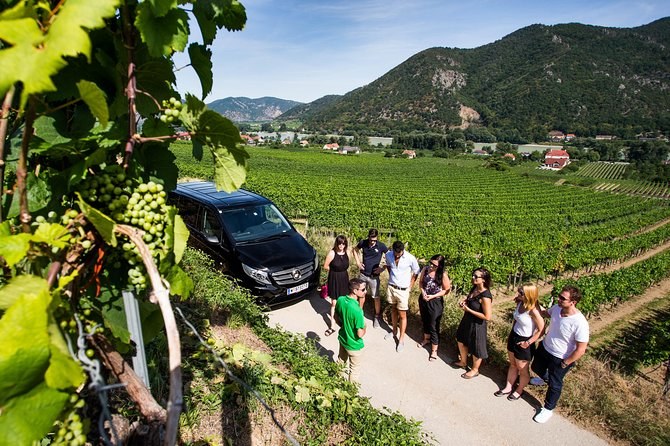
Wachau Valley Small-Group Tour and Wine Tasting from Vienna
Eight seats from Franz-Josefs-Kai at 9:00, tastings in the fare, a 70-minute cruise May to September and Melk Abbey in winter.
From $232 per person
Check Availability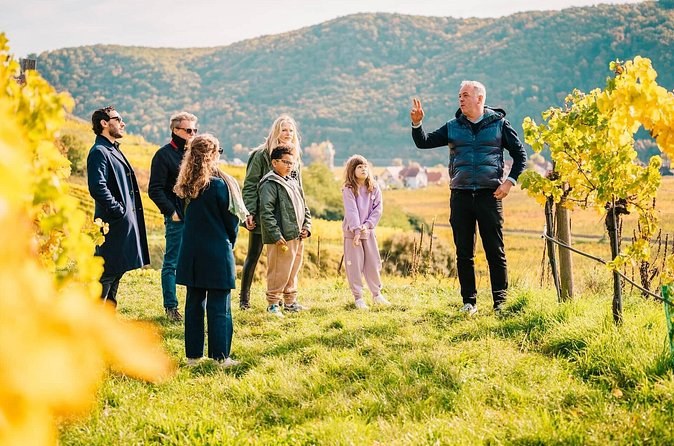
Wachau Valley Private Wine Tour with Tasting and Gourmet Lunch
A sommelier, three or four estates and a gourmet lunch at Josef Jamek, from your hotel at 9:00; non-refundable.
From $1,154 per person
Check Availability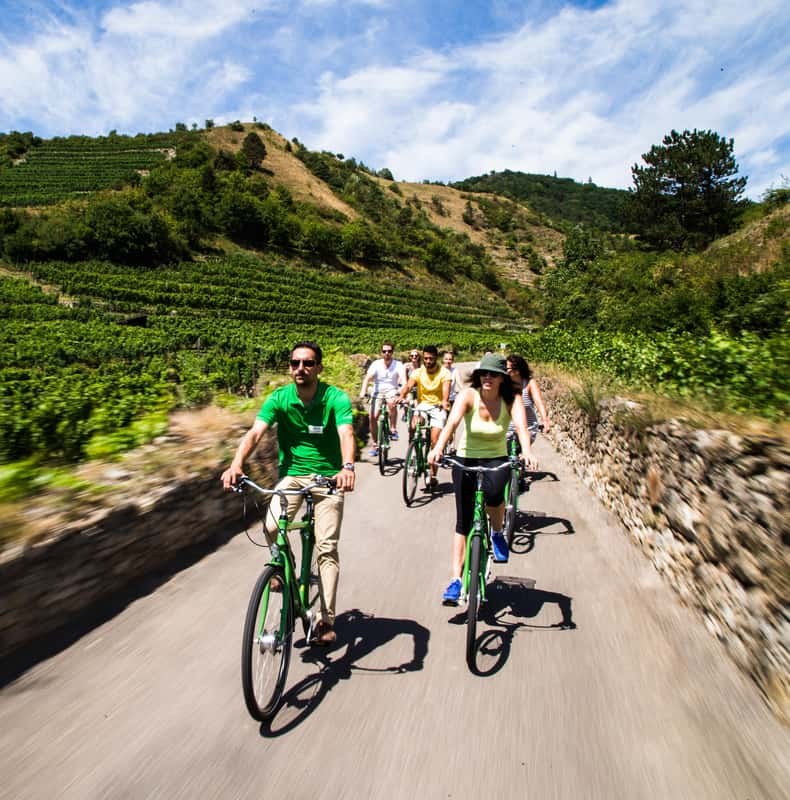
Grape Grazing: Wachau Valley Winery Biking Tour
The train to Krems, 25 km of riding through Dürnstein to Rossatz-Arnsdorf with a ferry crossing, and two winery tastings.
From $159 per person
Check AvailabilityNext: choose a tasting day that fits your pace, and order your first Federspiel there. Every fare sits side by side on Wachau Valley Tours.